FAQs
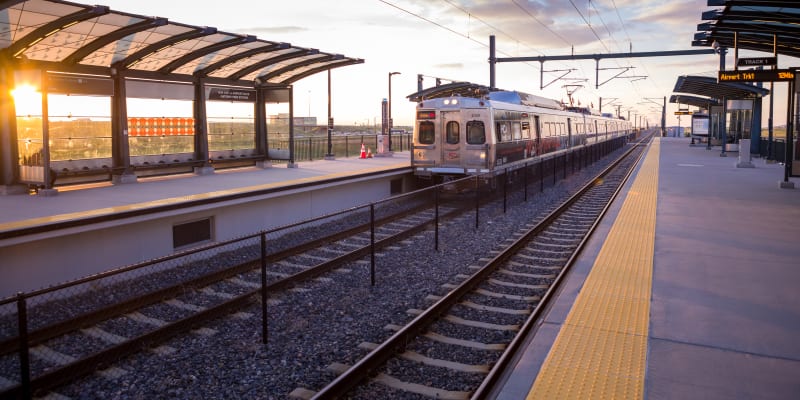
1. What is the North Metro Corridor?The North Metro Corridor is a proposed 18-mile rail transit corridor between Denver Union Station and SH7/162nd Avenue, passing through Denver, Commerce City, Thornton, Northglenn, and unincorporated Adams County. The North Metro Corridor Environmental Impact Statement (EIS), currently underway, will identify the best way to provide a high-quality, reliable, high-capacity fixed-guideway transit service for the area while improving travel times and enhancing access to jobs, recreation and entertainment.
2. What will the North Metro Corridor EIS accomplish?
The North Metro Corridor EIS will identify the best way to provide high-quality, reliable rail transit service that improves travel time in the corridor while enhancing access to metro-area jobs, entertainment, recreation and shopping for existing and future residents. This EIS will select a preferred alternative, identify potential impacts and recommend ways to avoid or minimize those impacts.
3. How will the following decisions be made: rail alignment, commuter rail technology and locations of proposed stations?
The decisions that impact the project will be identified in the Draft Environmental Impact Statement (DEIS) document. The project has evaluated a number of rail alignments and determined through public input and technical analysis, the most appropriate alignment for the North Metro Corridor. The project also evaluated various rail technologies, and the preferred technology for the corridor Electric Multiple Unit (EMU). The factors that were considered include 1) ability to integrate into the FasTracks system, 2) capital and operating costs, 3) operations and maintenance requirements, 4) environmental impacts and 5) public input. In regard to the proposed stations for the corridor, the EIS team worked collaboratively with the communities and property owners to ensure that stations serve regional and local transportation needs and are a community asset. Station Planning Committees (SPC), which included local city and county staff and residents, were created to help in this process. The FasTracks Plan, approved by the voters in 2004, identified a number of possible station locations. The North Metro EIS built upon and incorporated previous work, including those stations identified in FasTracks, and considered other station location ideas.
4. How will the project protect the safety of children and residents along the corridor?
Safety for children, riders and residents is a priority for all of the FasTracks corridors. In addition to fencing and gates, which are used to keep the public safe, the North Metro Corridor team is working closely with school districts along the corridor and will also coordinate with the various police departments and the Adams County Sheriff's department, through which the North Metro corridor passes, to develop any necessary safety and crime prevention programs. National studies indicate that the extension of a public transportation service does not create additional crime or increase safety problems. RTD's experience with its light rail projects has shown no increase in crime or any increase in problems for nearby schools.
5. How will the North Metro project impact the value of homes that directly border the various alignments?
We understand that residents along the North Metro Corridor tracks are concerned that the impacts of the line will negatively affect their property values. Property values are determined using many factors -- some can be related to proximity to transit but many are not. Several factors are very subjective and make determining future values very difficult. In addition, the real estate market fluctuates regularly, so individual property values will fluctuate as well. There are, however, recent studies conducted around the country that concluded property values tend to increase near transit stations providing connectivity to a regional transportation system.
6. Will RTD need to acquire property?
The North Metro Corridor currently completing the FEIS phase of the project. We will have more information on potential affected properties as the design advances. If there are properties that need to be acquired for the project, RTD follows a federal process under the Uniform Relocation Assistance and Real Property Acquisition Policies Act to ensure properties are purchased for fair market value.
7. How will commuter rail noise and vibration be addressed?
As part of the planning phase for each of the FasTracks corridors, RTD addresses environmental impacts and makes recommendations for minimizing these impacts. Recognizing the effects of train horns on nearby communities, RTD will assist and facilitate the local jurisdictions' efforts to establish Quiet Zones along the Gold Line, Northwest Rail, East and North Metro Corridors. (For more on Quiet Zones go to http://www.rtd-fastracks.com/main_112). What is a Quiet Zone? For safety reasons, the Federal Railroad Administration (FRA) currently requires trains that travel along freight tracks to sound their horns anytime the train approaches a railroad crossing - an intersection where the railroad tracks cross a roadway. Quiet Zones are railroad line segments at least a half-mile long where railroad engineers don't have to sound their train horns at railroad crossings because other safety measures have been incorporated. In addition to Quiet Zones, Sound Barrier Walls or Berms will be used for mitigation where needed. What is a Sound Barrier Wall? A sound barrier wall or Berm is constructed to deflect the train noise away from a sensitive receptor (building, park, etc) to reduce the decibel levels of unwanted noise, thus mitigating the severity of noise impacts.
8. What is environmental justice and how is it considered on this project?
Environmental Justice regulations were created out of concerns that undesirable land uses and facilities were being placed in minority and/or low-income communities without regard to the consequences of these actions. A number of regulations were developed to encourage better public involvement and decision-making during the planning and implementation of major projects, such as the North Metro Corridor EIS. The U.S. Department of Transportation (USDOT) requires compliance with these regulations for transportation projects. The implementation of Environmental Justice principles should:
- Assist in making better transportation decisions with the needs of all people in mind.
- Assist in the design of facilities that fit within their host communities.
- Enhance the public involvement process and ensure full and fair participation by all communities potentially affected.
- Avoid or minimize high and adverse affects to human health and environmental impacts on minority and low-income populations.
- Prevent the denial or delay of significant benefits to the project.
9. What is the schedule and when can the public participate?
The project welcomes public participation throughout the entire EIS process. There are various ways to participate; attending meetings, submitting comments (online, over phone, and at meetings). We encourage the public to sign up for our mailing list so that they can stay informed on the progress of the project and receive periodic updates and news about recent developments and meetings. The schedule is below. The current project schedule is to release the FEIS (Draft Final Environmental Impact Statement) document by Spring, 2010. In late Spring, the Project Team will publish a Notice of Availability (NOA) in local news publications and in the Federal Register announcing the release of the FEIS. The FEIS will be made available on the project Web site and at local libraries for public review and comment. Public Hearings will be held in mid-June, and it is anticipated that the Federal Transit Administration will authorize a decision document in July 2010.

*As of November 2007 - Interim schedule dates shown are approximate and flexible. Schedules are updated on a quarterly basis.
10. What issues are evaluated in the DEIS?
We evaluate social, environmental and economic impacts such as noise and vibration, right-of-way acquisition, traffic, parks and recreation, wetlands, floodplains and water resources, biological resources, cultural and historic resources, air quality, visual, and public safety and security. The results of these findings are discussed at public meetings as the information becomes available. The alternatives evaluation, potential impacts and measures to mitigate impacts will be presented in the Draft Environmental Impact Statement (DEIS) document.
11. What is going on with connecting North Metro Corridor with the North I-25 to Fort Collins?
The Colorado Department of Transportation (CDOT) is currently conducting an EIS along its North I-25 HWY (http://www.dot.state.co.us/northi25eis/). As the primary route between northern Colorado and the Denver metropolitan area, the I-25 corridor has experienced considerable growth over the years. People are increasingly aware that demands on the existing transportation system are exceeding its ability to serve travelers efficiently. Along with increased traffic volume on I-25 and parallel roadways has come an increase in accidents, resulting in a need to plan for transportation improvements within the corridor. The initiation of the North I-25 EIS represents the next step in evaluating and planning for improvements in this corridor. One of the alternatives under study is a commuter rail option that would connect with the North Metro Corridor at 162nd Ave. The North Metro Corridor EIS is working and communicating closely with this projects and cities that correlate with our project in order to best serve the public transportation needs of the future.
12. Will North Metro Corridor buses continue to run once FasTracks commuter rail service is open?
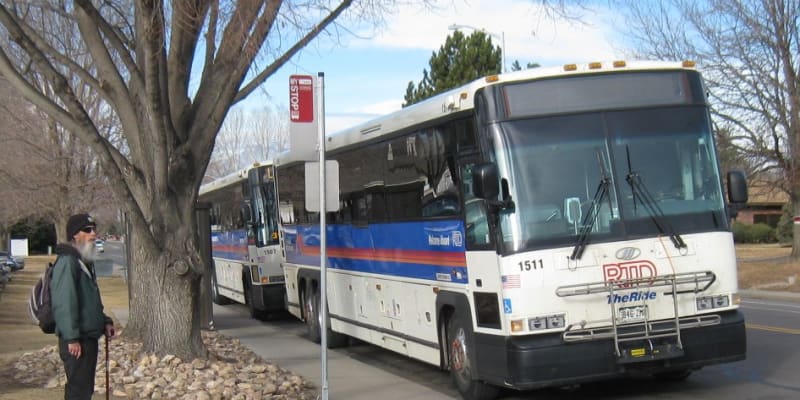
Yes. Express bus service on I-25 will remain similar to current services. Existing routes closer to the commuter rail alignment will be modified to eliminate duplication of transit service patterns and to provide feeder bus service to and from the commuter rail stations. In addition, the FasTracks program also includes new FastConnects bus service, an improvement of bus service for suburb-to-suburb travel patterns.
13. What is the status of the railroad negotiations and how does it affect North Metro?
The Union Pacific (UP) Railroad's proposed price for a package of properties, including southern portions of the North Metro alignment, was unaffordable within the FasTracks budget. All of the FasTracks commuter rail corridors were affected by the recent information from the UP negotiations. The East Corridor, Northwest Rail Corridor and the Gold Line teams all refined the preferred alternatives in the portions of those corridors closest to Denver Union Station.
As a result, the North Metro project revisited the alternatives in the south, between Denver Union Station and 54th Avenue. The alternatives being revisited include the previous BNSF Railway alignment alternative, the Union Pacific alignment, and a new UP alignment to avoid unavailable UP property.
The recent right-of-way package costs affect only the southern portion of the North Metro Corridor. The northern portion is not affected, and the negotiations with the UP were conducted with RTD's purchase of the UP Boulder Branch in June 2009.
14. If the southern part of the North Metro Corridor runs along the BNSF Railway alignment and no longer shares track with the East Corridor, how will I transfer to East Corridor to get to Denver International Airport?
On the previously recommended alignment along the Union Pacific, North Metro and East Corridor shared a planned station at 40th and 40th in Denver where transfers could be made. When the Union Pacific presented RTD with the package of properties that was unaffordable, North Metro revisited the BNSF Railway alignment. If that alignment becomes the preferred alternative, there is not an opportunity for a shared station between North Metro and East Corridor. RTD, however, provides many alternatives for traveling to the airport, including direct skyRide bus routes from some of the northern park-n-Rides. North Metro Corridor riders can also travel to Denver Union Station and transfer to the East Corridor to go to the airport.
15. Where is the location of the proposed Commuter Rail Maintenance Facility?
The previous proposed site for the Commuter Rail Maintenance Facility (CRMF) at Union Pacific's 36th Street yards was affected by the Union Pacific negotiations and the package of properties that was unaffordable.The CRMF project is being evaluated in a separate Environmental Assessment. RTD identified a new site for the CRMF at Fox Street and 48th Avenue.The CRMF project was evaluated in a separate Environmental Assessment.
Revised 03/24/2010